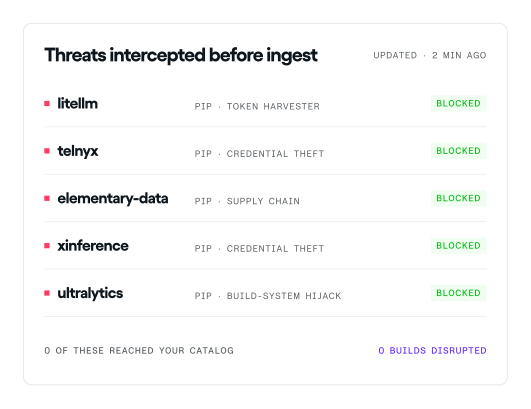
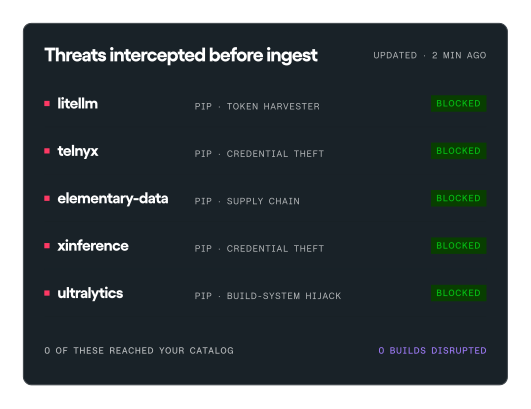
Avoid the next supply chain attack on PyPI by replacing it with Chainguard Libraries for Python. You get a secure repository of Python packages that are immune from the next malware attack and CVE backports for your hard-to-upgrade versions.
























































Why Chainguard?
Trusted libraries you can’t get elsewhere
Proactive malware prevention
Stay protected from malicious attacks often inserted during the build and distribution stages of package creation.
Verification by default
Every library is built in a secure, SLSA L3 build system with full provenance and signed SBOMs to prove supply chain integrity.
System scale
Access thousands of Python packages that replace what you get from PyPI, with more being added every week.
Expertise and experience
The leading open source minds driving the industry forward, delivering new innovations for developers.
Don’t break your legacy app to fix a vulnerability
Stay secure without the forced refactor. Chainguard backports upstream fixes for critical and high-severity CVEs directly into our malware-resistant libraries. You get the security of the latest patch with the stability of your current version, giving your team ore time to plan upgrades on your terms.
CVE-2024-53908
Remediates a vulnerability in Django that allows remote attackers to execute arbitrary database commands via untrusted JSON field lookups.
CVE-2025-47273
Remediates a vulnerability in setuptools that allows arbitrary file writes and potential remote code execution.
CVE-2022-40898
Remediates a ReDoS vulnerability in wheel that allows remote attackers to exhaust system resources via malicious package filenames.
CVE-2025-48379
Remediates a vulnerability in pillow that allows for potential arbitrary code execution when processing malformed or large DDS images.
Built for teams where speed and security are non-negotiable
Data teams with legacy apps
End the ‘patch or break’ dilemma. We backport hard-to-fix CVEs, so your production pipelines remain secure while you plan your next major version upgrade.
AI/ML startups
Ship fast with enterprise-grade confidence. Pass customer security reviews on day one by proving your AI stack is built on a secure, malware-resistant foundation.
Highly regulated enterprises
Audit-ready by default. Replace manual audit prep with automation. Signed SBOMs and provenance prove component integrity and simplify compliance evidence reporting.
Covers all of your Python dependencies
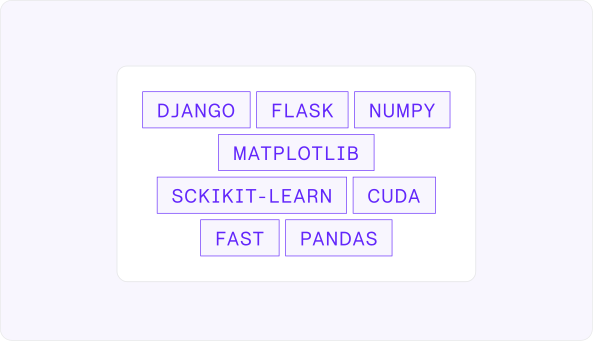
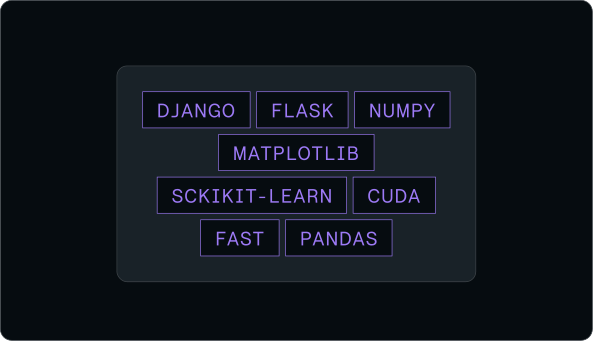
Access the data science and AI stack you need, such as pandas, numpy, and CUDA, along with everything else you need for your Python application.
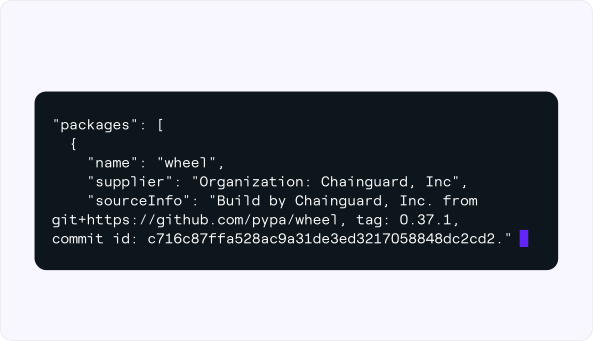
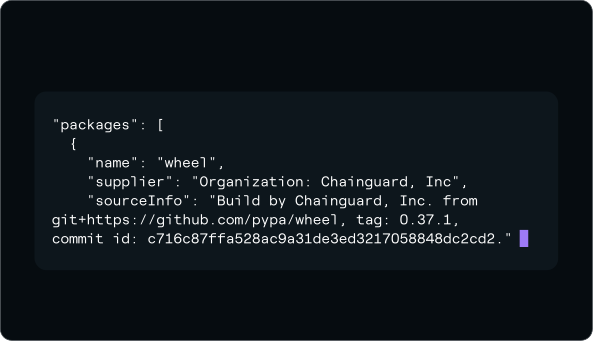
Signed, sealed, and dependable
Every version comes built with full provenance and signed SBOMs, so you have indisputable proof that your dependencies came from the SLSA L3-compliant Chainguard Factory, not a vulnerable maintainer’s machine.
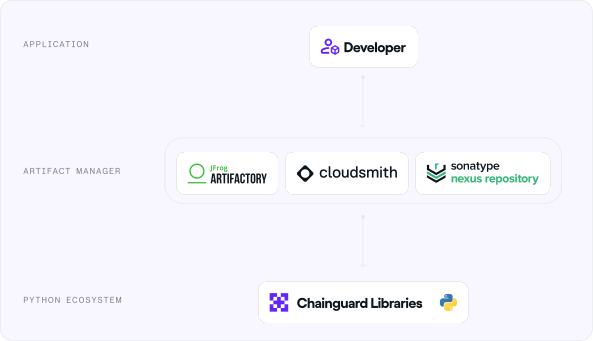
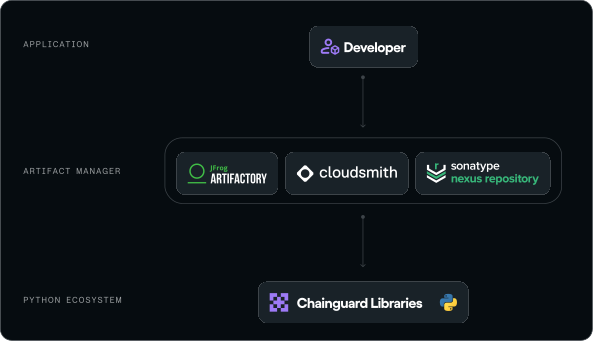
Works with your existing tooling
Chainguard Libraries for Python works with your existing artifact managers and workflows. Each package has the same functionality as to what you’ll find on PyPI, so there are no breaking changes. Your engineers won’t notice a difference.
Entdecken Sie den Rest der Chainguard-Produktpalette
Verwandte Ressourcen
98% less malware: The data behind a safer open source supply chain
Jetzt lesen
This Shit is Hard: The complexities of fixing Python library security issues at scale
Jetzt lesen
This Shit is Hard: Building hardened PyTorch wheels with upstream parity
Jetzt lesen
Introduction to Chainguard Libraries for Python
Jetzt lesen