Prevent AI attacks on your language dependencies
Switch standard registry endpoints to Chainguard to prevent malware, shrink your CVE backlog, and remediate frontier AI-discovered zero-days so your engineers and agents always pull safe, trusted packages.























































Security or dev velocity. Why choose?
Supply chain attacks are weekly occurrences. Daily CVE reports are up 80%+ this year. Chainguard Libraries let’s your team avoid the security noise and focus on the product roadmap.


Prevent malware by design
Stop malicious packages before they ever reach your environment with a catalog of open source dependencies that are built and vetted by Chainguard.


Eliminate vulnerabilities
Limit CVE and zero-day exposure for versions you're stuck on with Chainguard-remediated artifacts, allowing you to stay safe while you plan your next upgrade.


Avoid security toil
End the patching, incident response, and security tax that comes with monitoring your dependencies so your developers and agents stay focused on the roadmap
Chainguard replaces your public registry endpoints
Stop reacting to supply chain attacks and start preventing them. Chainguard Libraries is a malware-free catalog of open source dependencies that allows your team to ship without inheriting someone else’s security compromise.
SUPPORTED ECOSYSTEMS
 Learn MorePython
 Learn MoreJava
 Learn MoreJavascript
 Learn MoreGo
 Learn More.NET
Malwhere? Not here.
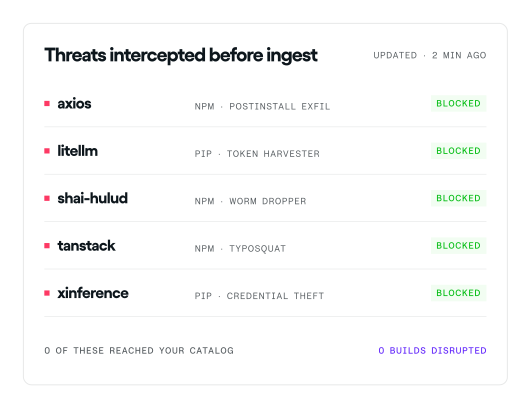
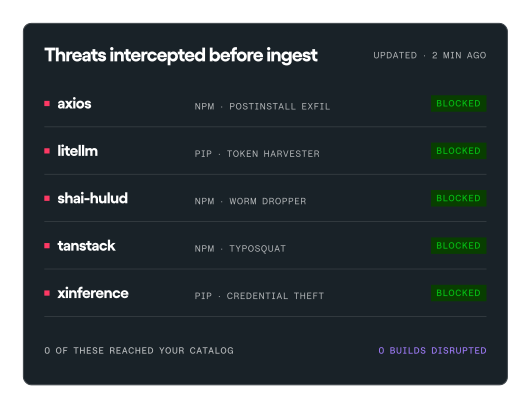
Whether it’s a malicious backdoored binary, install-time script, or typosquatted package, Chainguard Libraries are safe from the malware compromises that have made headlines over the last few months.
Get startedaxios
Nation-state actors attacked the HTTP requests package in npm that’s used 400M+ times a month.
litellm
Attackers hit a key AI gateway package in PyPI with 280M+ monthly downloads.
Shai-Hulud
A worm spread through ~800 npm packages and harvested thousands of private credentials.
tanstack
A typosquatted npm dependency duped @TanStack users with four malicious versions.
elementary-data
Attackers released malicious version of an AI project with 1.1M+ monthly downloads.
chalk
Bad actors released 18 npm packages with more than 10B+ collective monthly downloads.
Step off the remediation treadmill with Chainguard-patched artifacts
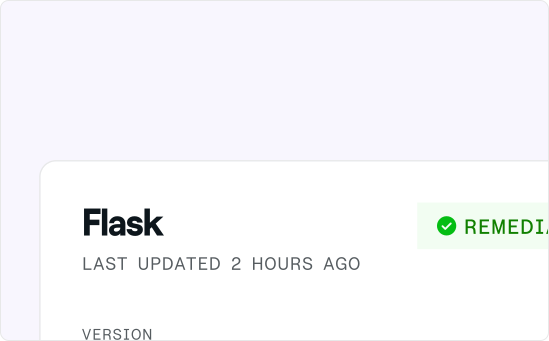
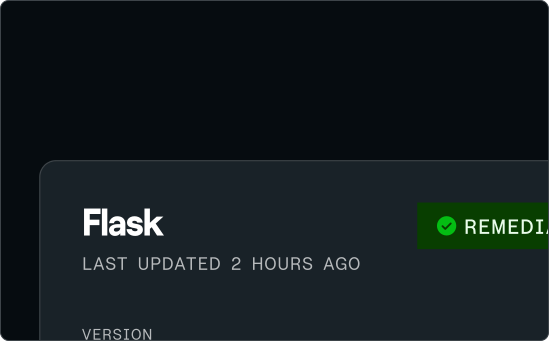
CVE backports for versions you’re stuck on
Fix CVEs in legacy dependencies without forcing version bumps. Every remediated package includes embedded SLSA L3 provenance and SBOMs, letting auditors verify patches with a single CLI command.
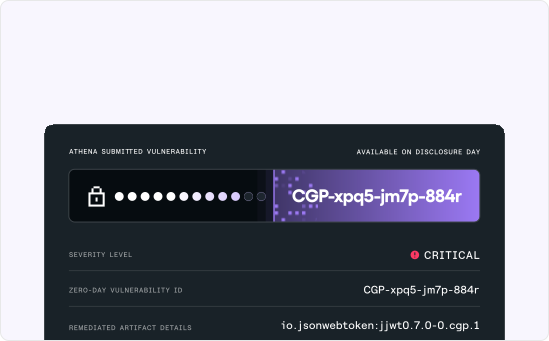
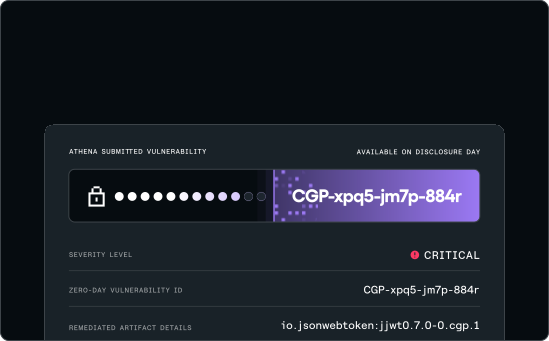
Zero-day protection on day zero, powered by Athena
Benefit from the crowdsourced threat intelligence of the world’s largest institutions. Get day zero access to thousands of packages pre-patched against AI-discovered vulnerabilities, keeping your data safe from hackers.
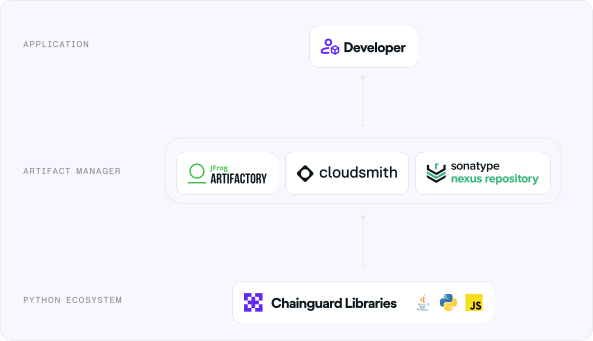
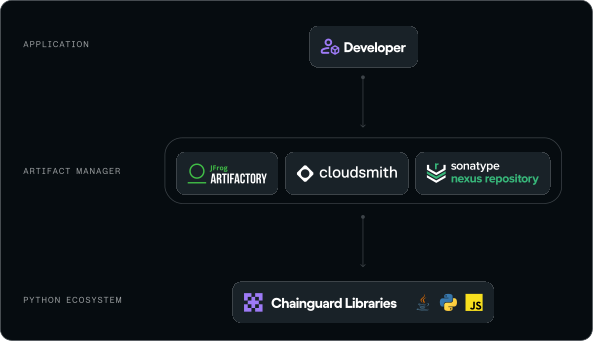
Works with your existing tooling
Chainguard Libraries works with your existing artifact managers and workflows. Each package has the same functionality as the public upstream version, so there are no breaking changes. Your engineers won’t notice a difference.
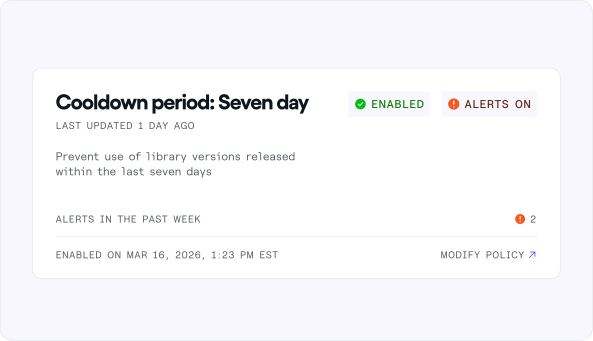
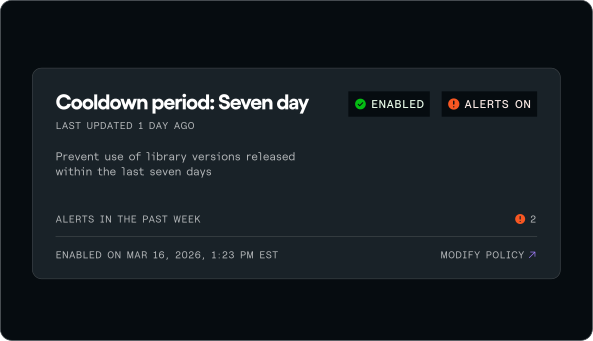
Embedded policies protect what’s not built
With the Chainguard Repository, you get every package you need on day one. Configure cooldowns and block packages that don't meet your organization's standards. Your supply chain security improves overnight.
Learn more about Chainguard Repository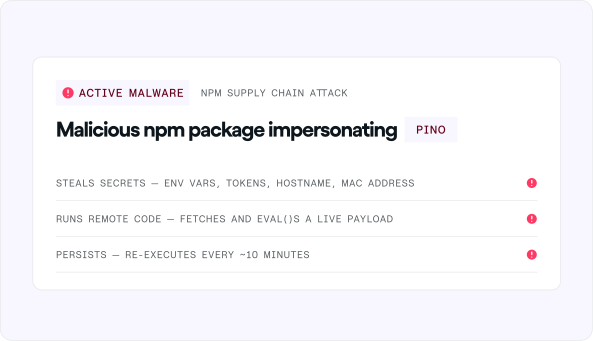
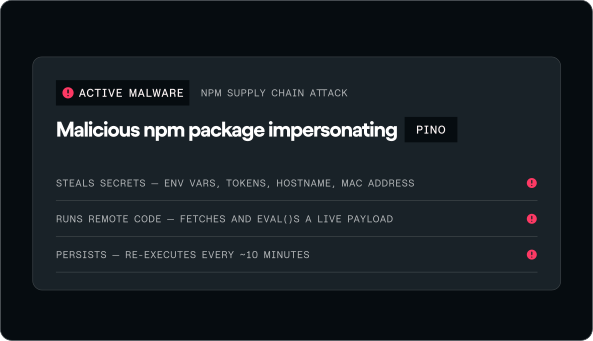
Every package is scanned for malicious behavior
Our software factory scans for malware and 'greyware' packages before any artifact can reach your team. With Chainguard, you don’t have an exposure window because we never build or distribute packages until they’re marked safe.
Learn more about greyware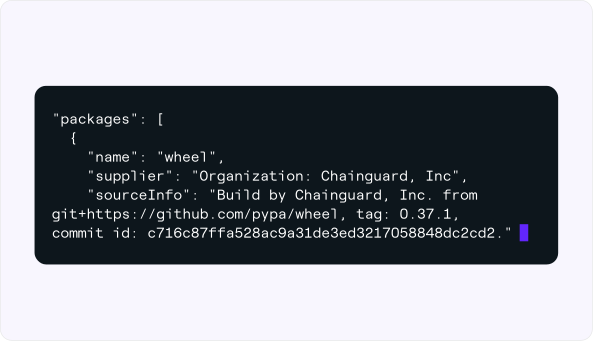
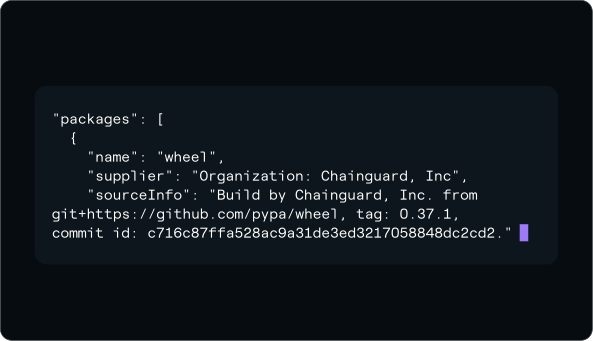
Signed, sealed, and dependable
Every Chainguard-built version comes built with full provenance and signed SBOMs, giving you indisputable proof that your dependencies came from the SLSA L3-compliant Chainguard Factory and not a vulnerable maintainer account.
Trust in every phase of the SDLC
Explore the rest of Chainguard's product suite
Code safely with agents
Build with trusted artifacts
Ship through trusted CI
Related resources
Introducing Chainguard Repository: A unified experience for secure-by-default open source artifacts
Read now
Registries and the npm Breach: Securing the Weakest Link in the Software Supply Chain
Read now
Malware-Resistant Python without the Guesswork
Read now
Announcing Chainguard Libraries: Guarded Java Language Dependencies Built from Source
Read now
Chainguard’s Vision for a Safer Software Supply Chain
Read now
Panic! At The Distro: A Study of Malware Prevention in Linux Distributions
Read now
Taming bad Python packages: Assessing Python malware detectors with a benchmark dataset
Read now